
The “Staircase”
Seeing the Structure: The “Staircase” in Isaiah 56–66
(A brief technical note for those who want to go a little deeper)
If you’re interested in the theological structure Isaiah is using in the final chapters of his book, read on. You may find this both helpful and enriching as you continue through the devotions.
Why this matters. As we’ve been moving through Isaiah, especially from chapter 56 onward, Isaiah uses an intentional writing pattern. This section is not just a collection of prophecies.
It is structured, carefully and purposefully, and that structure helps us understand what God is communicating at a deeper level.
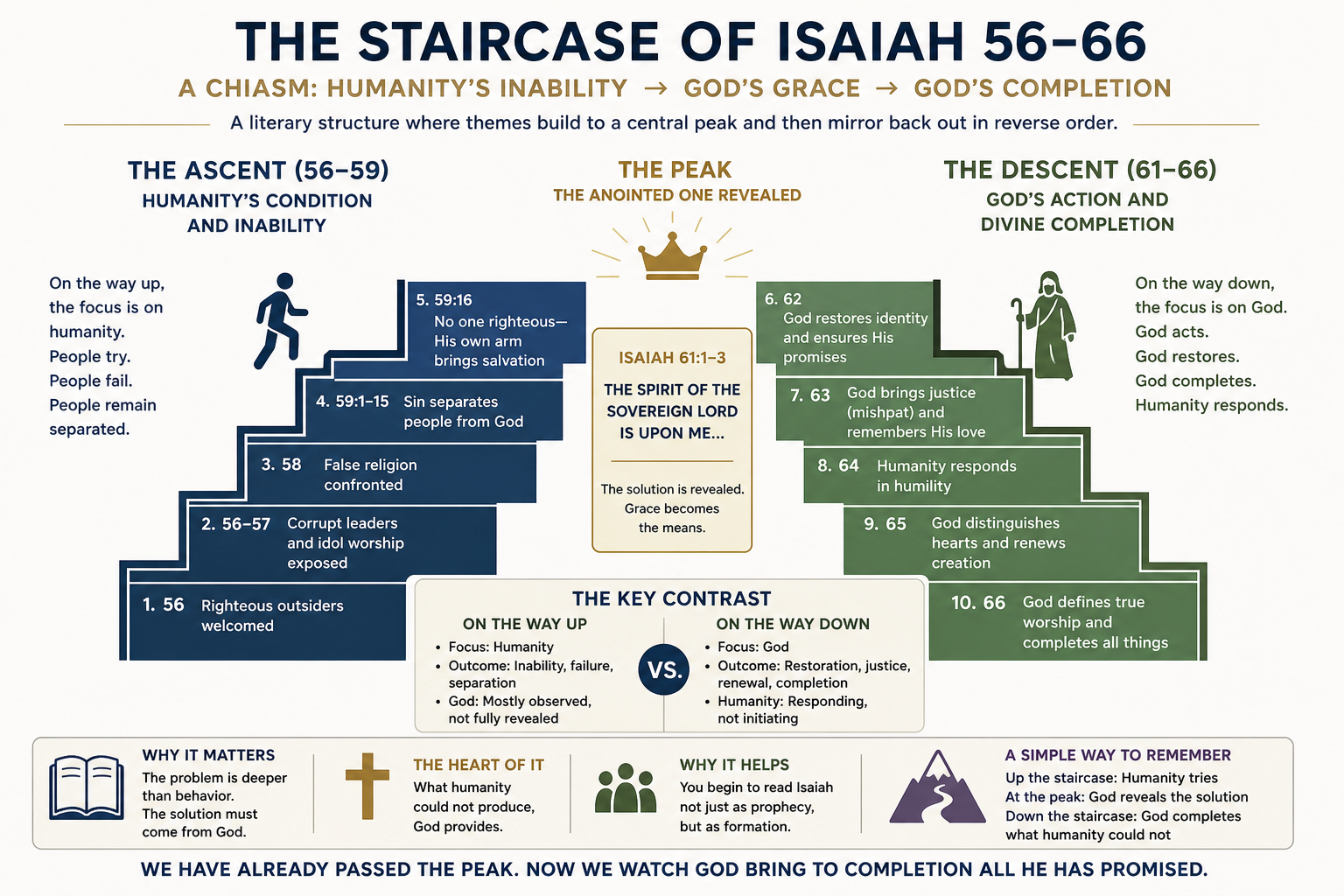
What we are seeing: A “staircase” or chiasm, this pattern here is often described as a chiasm. It is a literary structure where themes are arranged symmetrically and ideas build toward a central point, and then mirror back out in reverse order.
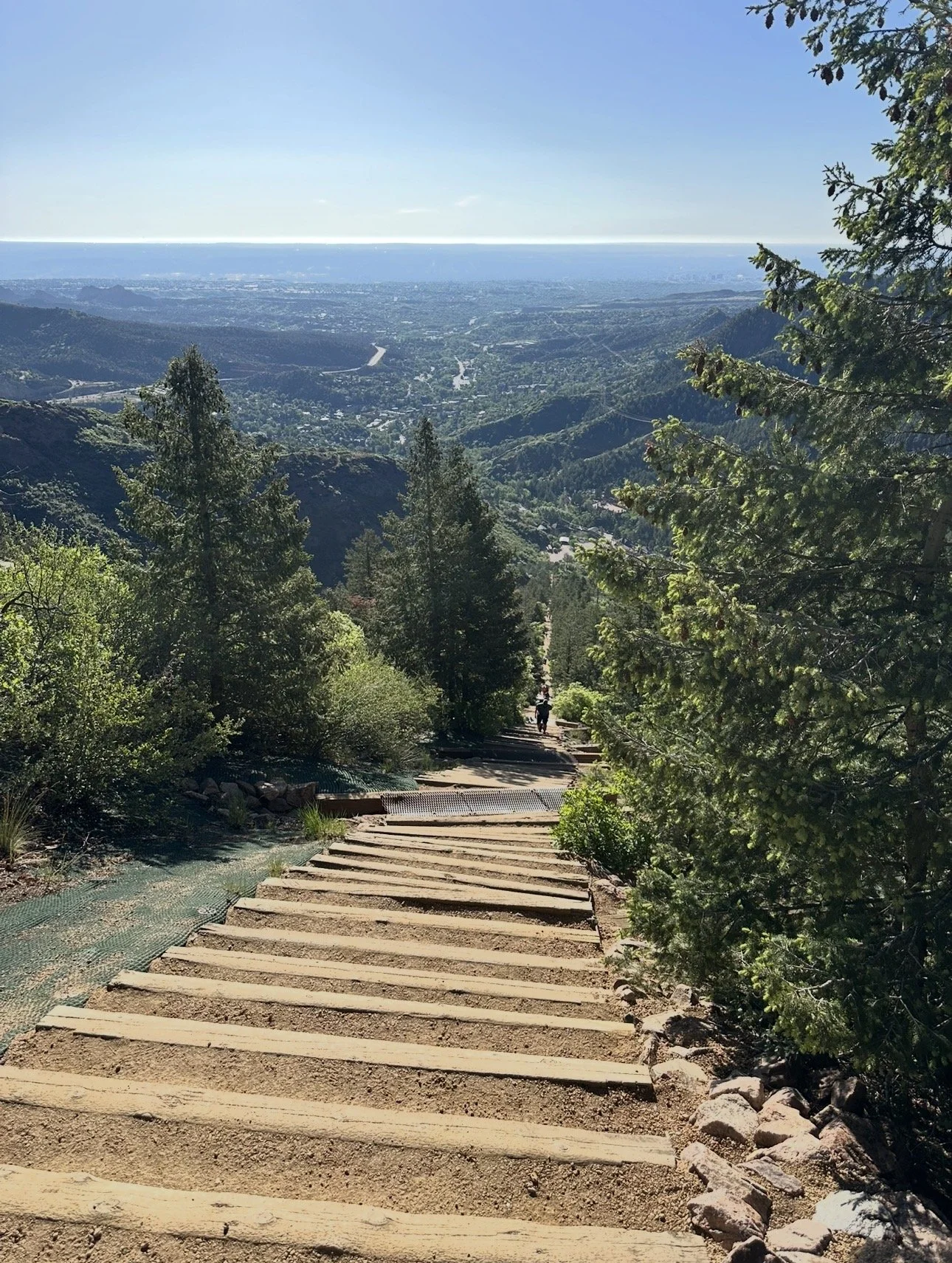
Think of it like a staircase, you climb up one side to reach a central peak and then descend down the other side.
The key turning point, in Isaiah 56–66, everything builds toward a central moment, Isaiah 61:1–3 — “The Anointed One”
“The Spirit of the Sovereign Lord is upon me…” This is the pinnacle and this is where God’s solution is revealed.
Everything before it leads up to this, and everything after it flows out from it.
The ascent (Chapters 56–59), reflects humanity’s condition and inability. On the way up the staircase, the focus is largely on humanity, Righteous outsiders (foreigners) are welcomed (Isaiah 56), corrupt leaders and idol worship exposed (Isaiah 56–57), and false religion is confronted (Isaiah 58). Then the problem, sin is separating people from God (Isaiah 59). So the pattern is clear. People try, people fail and humanity (people) remain separated from God. It is worth noting that there is very little emphasis on what humanity can achieve, and only glimpses of God’s intervention.
The turning point (Isaiah 59:16 → 61:1–3) At the end of chapter 59 we read, “He saw that there was no one… so His own arm brought salvation.” And this is crucial. Humanity cannot resolve the problem, so God acts.
And then we arrive at Isaiah 61:1–3 — The Anointed One. The Holy Spirit is present, the mission is declared and God’s solution is revealed.
This is the moment where, Grace becomes the means
The descent (Chapters 61–66), God’s action and divine completion. Now everything shifts, because on the way down the staircase, the focus is largely on God. God restores identity (Isaiah 62), God ensures His promises (Isaiah 62), God brings justice (Isaiah 63), God remembers His covenant love (Isaiah 63), Humanity responds in humility (Isaiah 64), God distinguishes hearts (Isaiah 65), God renews creation (Isaiah 65), God defines true worship (Isaiah 66) and God completes all things (Isaiah 66)
There is an intentional contrast at work and this is the heart of the structure.
On the way up, the focus = Humanity, Outcome: inability, failure, separation, God: mostly observed, not fully revealed
On the way down, the focus = God, Outcome: restoration, justice, renewal, completion, Humanity: responding, not initiating
Isaiah is structured this way, not just as literary artistry, it is theological.
Isaiah is showing us, that the problem is deeper than behaviour and the solution must come from God.
The staircase then reveals a powerful truth. What humanity could not produce, God provides.
My hope is that this understanding helps with your reading. Once you see this structure, the warnings feel more purposeful, the grace feels more intentional, and ‘The Anointed One’ becomes central.
And perhaps most importantly, you begin to read Isaiah not just as prophecy, but as the formation it was intended to be.
A simple way to remember it then.
Up the staircase: Humanity tries
At the peak: God reveals the solution
Down the staircase: God completes what humanity could not
One final thought. We have already passed the pinnacle as I write this. Now, as we continue through the remaining chapters, we are watching God bring this all to completion.